High-pressure washing can crack vinyl and force water behind siding panels. Soft washing uses low pressure and an algae-killing solution instead — safer for your home's exterior and it lasts longer than a straight pressure rinse.
Get a Free Soft Wash QuoteSiding, brick, fences and decks — all cleaned at the right pressure for the material, not blasted with a wand.
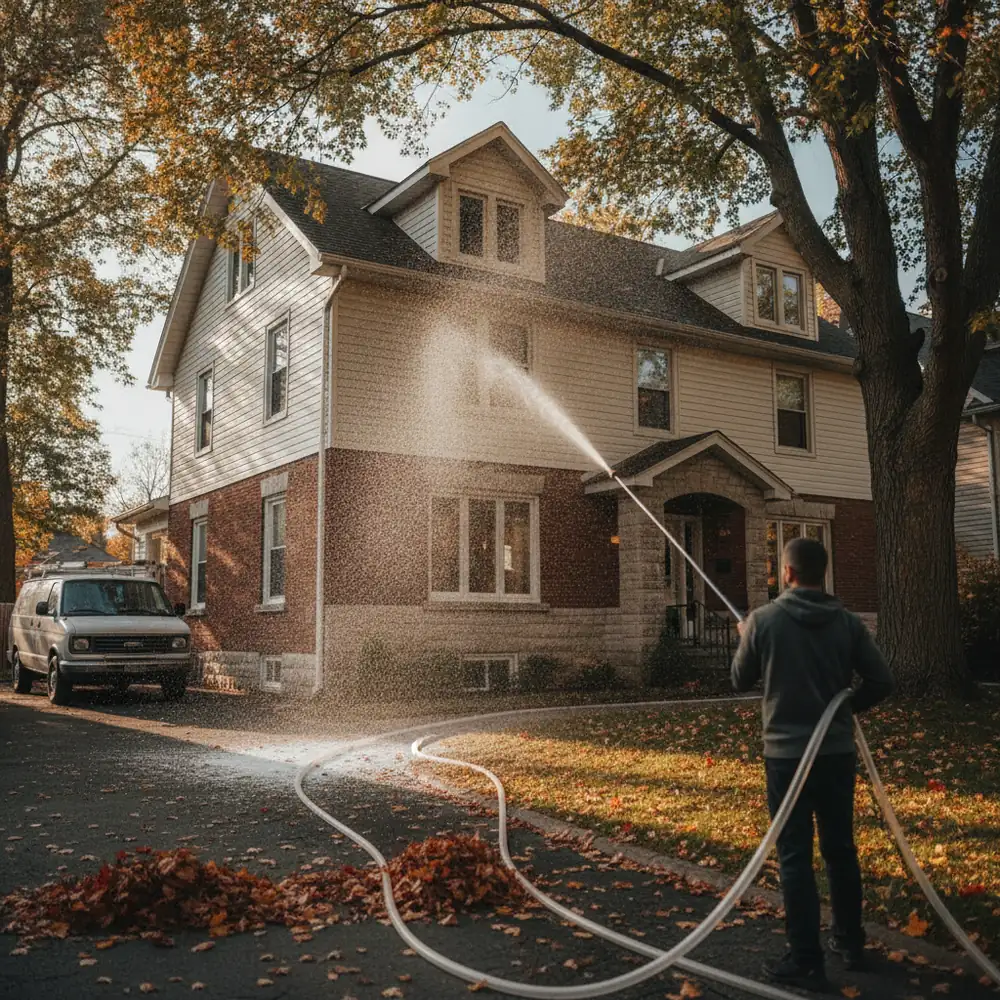
Low-pressure algae and mildew removal for vinyl siding — the industry-recommended method that won't crack panels.
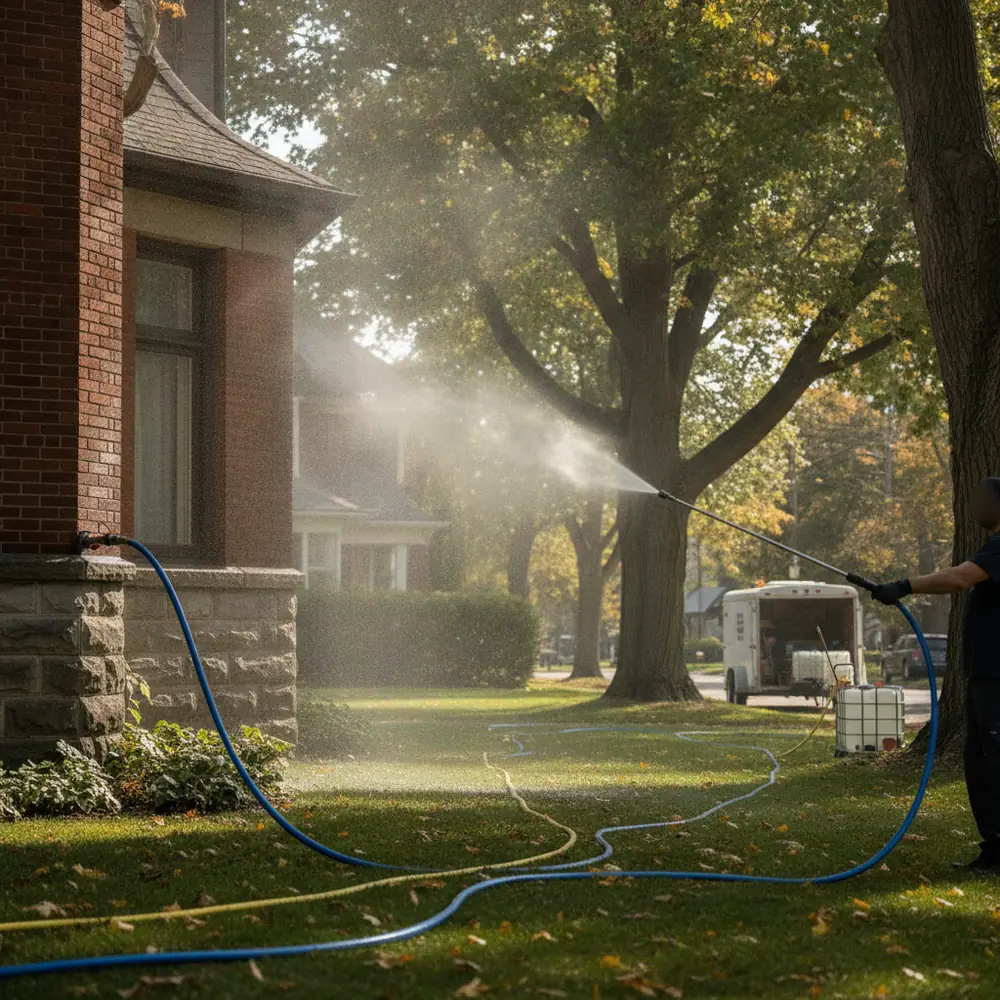
Gentle cleaning for brick and natural stone exteriors that protects mortar joints from high-pressure erosion.
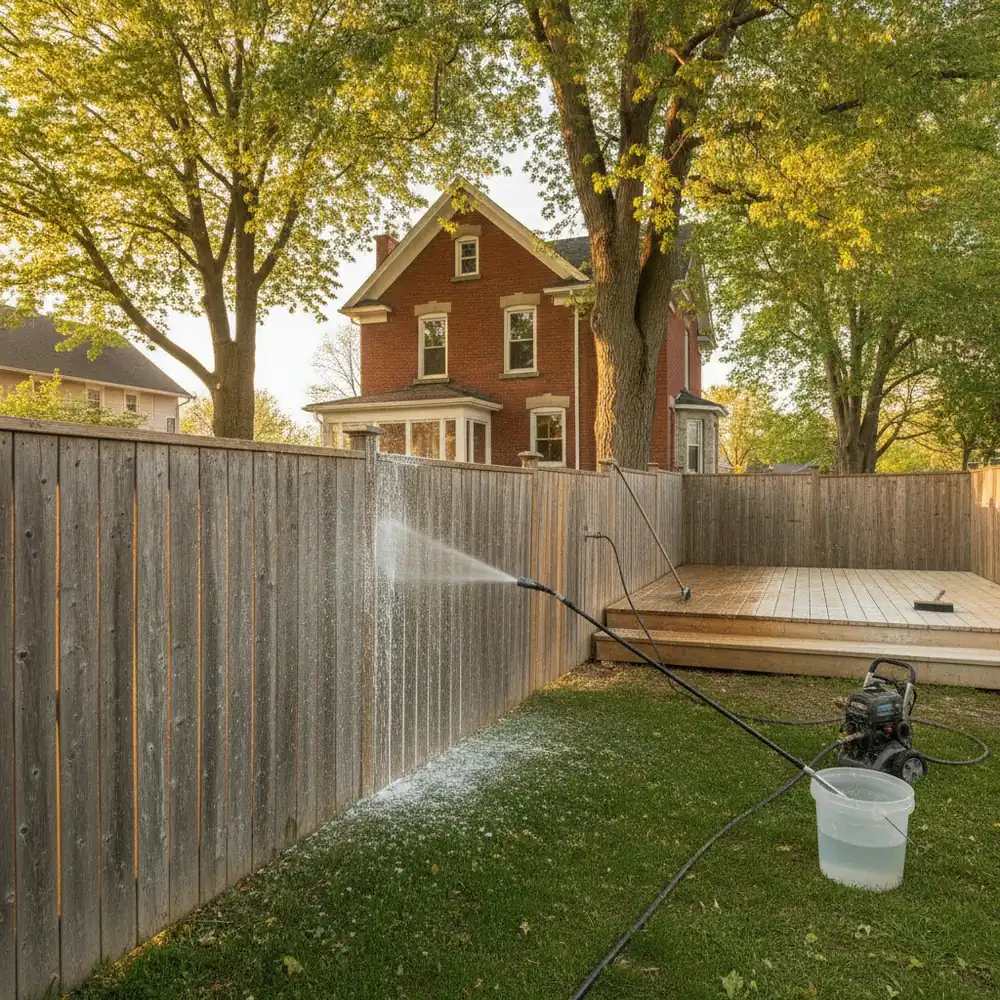
Wood and composite fences and decks cleaned gently — removes grey weathering and mildew without gouging the grain.
The instinct to crank up the pressure to clean faster is exactly what damages siding — vinyl panels can crack or blow inward at close range under high PSI, water can get forced behind panels into wall cavities, and mortar joints on older brick homes can erode under repeated high-pressure blasting.
Soft washing solves this differently: an algae- and mildew-killing solution does the actual cleaning work, applied and rinsed at low pressure. It's safer for the surface and the results last longer, since the algae is killed at the root rather than just knocked loose temporarily.
We serve: Guelph, Kitchener, Waterloo, Cambridge and surrounding Wellington County & the Tri-Cities communities.
Pressure washing relies on high water pressure alone to blast dirt off; soft washing uses a cleaning solution to kill algae/mildew at the root, applied at low pressure so it's safe for siding, painted wood and mortar joints that high pressure can damage.
A single-storey home typically runs $250–$450; two-storey homes are $350–$600, depending on square footage and how much algae/mildew buildup there is.
Yes — it's specifically the recommended method for vinyl, since high-pressure washing at close range is what cracks or blows out vinyl panels.
Crews manage runoff and rinse plantings if the solution contacts them — let us know about sensitive gardens when booking.
Typically 1–2 years before algae streaking starts to return, longer on sunnier, drier-facing walls than shaded ones.
Tell us about the job and we'll get back to you within one business day.